Journal Processing Timeline

Estimated Manuscript Processing Timeline

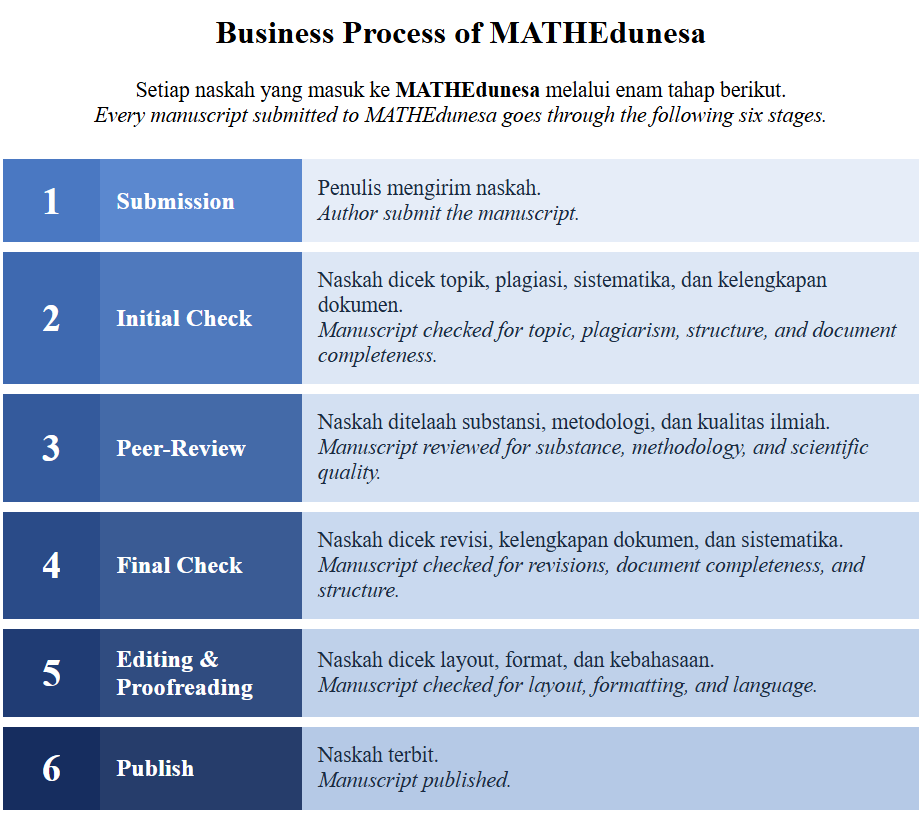
The flowchart illustrates the six main stages of MATHEdunesa editorial workflow: Submission, Initial Check, Peer Review, Final Check, Editing & Proofreading, and Publication. It explains the purpose of each stage before a manuscript proceeds to the next stage and is ultimately published. Manuscripts processed through to publication must complete the applicable editorial stages according to the outcome of the evaluation at each stage.

Although MATHEdunesa aims to process every manuscript as efficiently as possible, processing time may be influenced by several factors, particularly the quality and readiness of the manuscript, the time required by external Peer Reviewers to complete their evaluations, and the promptness of Authors in submitting revisions. Estimated processing times for each stage of the editorial workflow are presented in the table below.

Editorial Stage

Estimated Processing Time

Estimated Cumulative Time

Initial Check by Editor

1–2 weeks

1–2 weeks

Peer Review Process

6–12 weeks

7–14 weeks

Final Check by Editor

1–3 weeks

8–17 weeks

Copyediting, Layout Editing, and Proofreading

3–6 weeks

11–23 weeks

Manuscripts submitted to MATHEdunesa go through a structured editorial process to ensure the quality, originality, and scholarly rigor of each published article. The timeline below is an estimate. Actual durations may vary depending on manuscript complexity, reviewer availability, and how quickly authors respond to revision requests.

In the initial check, the editor reviews the manuscript for its fit with the journal’s focus and scope, compliance with the author guidelines, and similarity level. This stage usually takes one to two weeks. Manuscripts that do not meet the basic requirements may be returned to the authors or declined at this point.

Manuscripts that pass the initial check move to double-blind peer review, which is usually the longest stage. Reviewers assess the theoretical grounding, methodological soundness, analysis, and contribution to mathematics education. Because of the depth of evaluation and the possible need for several rounds of revision, this stage is estimated to take six to twelve weeks. That brings the cumulative time to about seven to fourteen weeks from submission.

During the final check, the editor verifies that the authors have adequately addressed all reviewer comments and makes the final editorial decision. This stage takes about one to three weeks.

Accepted manuscripts then go through copyediting, layout editing, and proofreading. This work refines the language, standardizes formatting and references, prepares the galley proof, and incorporates the authors’ confirmation of corrections. To keep publication quality high, this stage is allocated three to six weeks.

Overall, authors can expect a total processing time of about 11 to 23 weeks, or roughly three to six months, from submission to publication readiness. Authors are encouraged to respond promptly to editorial correspondence and revision requests to avoid unnecessary delays.

Note: Actual manuscript processing times may vary depending on manuscript quality and readiness, Reviewer availability and feedback, the number or complexity of revisions required, and the promptness of Authors during the revision process. Cumulative time is calculated from the date of manuscript submission.